

When you hold your own self-custody crypto, a system where you alone control your private keys and digital assets without relying on third parties. Also known as non-custodial crypto, it’s the core principle behind true decentralization—no exchange, no bank, no one can freeze or take your coins. If you’ve ever wondered why some people refuse to leave crypto on exchanges, this is why.
Self-custody isn’t just a tech term—it’s a mindset. It means your private keys, the secret codes that prove you own your crypto. Also known as seed phrases, they’re the only thing standing between your assets and loss. Lose them? Gone forever. Share them? Gone instantly. That’s why tools like hardware wallets and encrypted backups matter more than any trading strategy. And while exchanges like bitFlyer or Indodax make it easy to buy crypto, they’re not your vault—they’re a rental locker. The moment you hand over control, you’re trusting someone else with your money.
Every post in this collection ties back to one truth: if you don’t hold your keys, you don’t own your crypto. You’ll find guides on staking safely without giving up control, warnings about fake airdrops that steal your wallet info, and deep dives into platforms like THORChain that let you swap assets without handing over custody. You’ll see how scams like BTX Pro and Cryptoforce prey on people who think exchanges are safe, and how real security means knowing the difference between a wallet and a trading account. You’ll learn why KYC on exchanges doesn’t protect you—it just gives them more power over your funds. And you’ll see how regulations in Thailand and Germany are pushing users toward self-custody, not away from it.
Self-custody crypto isn’t for everyone. It’s not about being a hacker or a genius. It’s about being responsible. It’s about knowing that your Bitcoin, your EGLD, your SNE tokens—none of them are really yours unless you can sign a transaction with your own keys. The posts below don’t just explain how to do it. They show you what happens when you don’t—and how to avoid becoming the next cautionary tale.
Posted By Tristan Valehart On 4 Dec 2025 Comments (22)
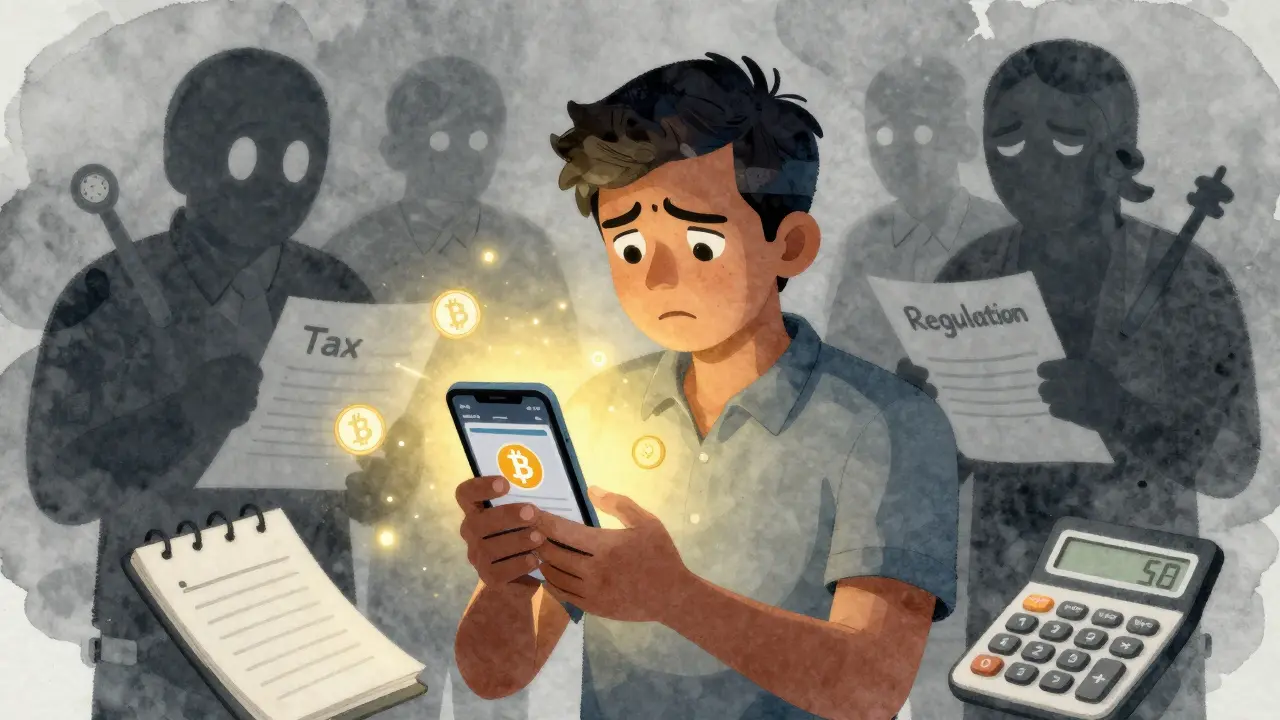
India hasn't banned non-custodial crypto wallets, but heavy taxes, unclear rules, and poor infrastructure are making them hard to use. Here's what's really happening - and what to do next.
READ MORE